Custom Novelty Claw Clips: Design, Grip & Quality Checklist for Brands
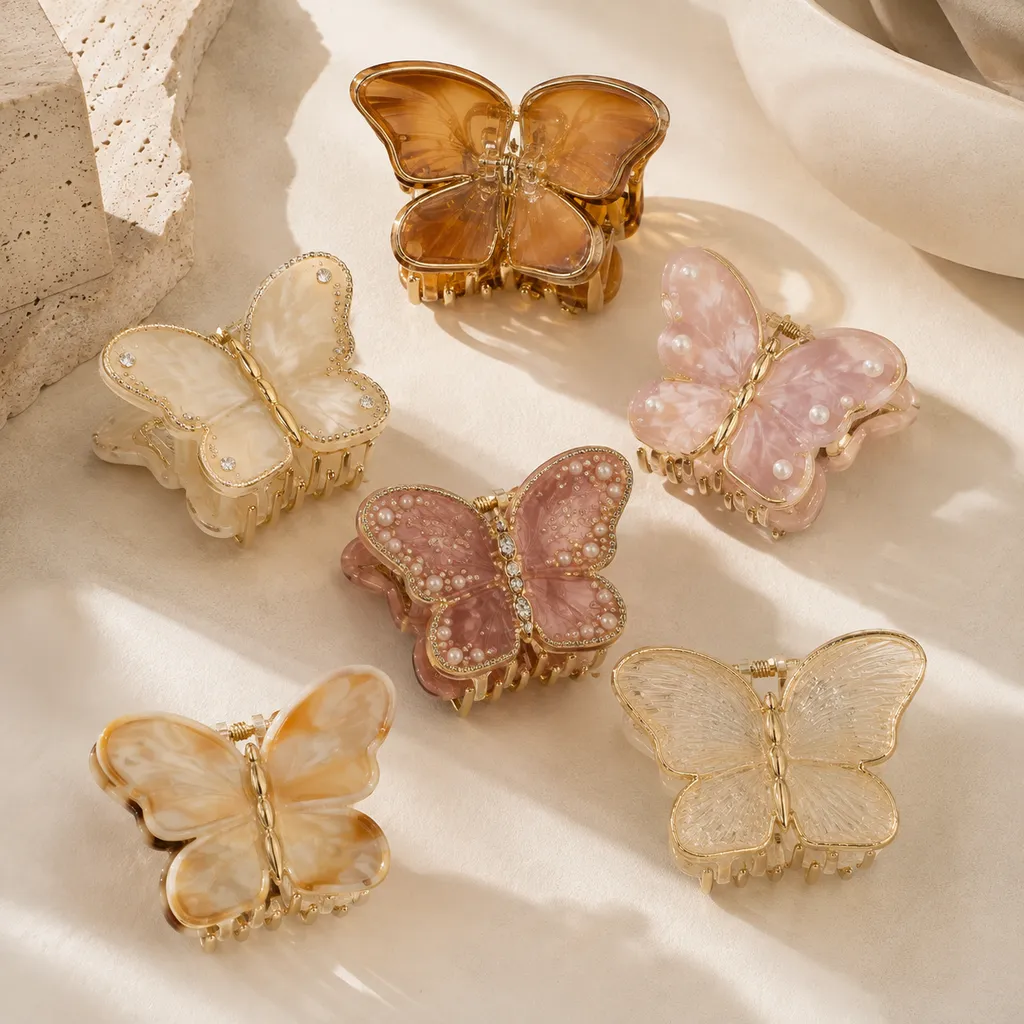
A successful custom novelty claw clip has to do two jobs at once: communicate a recognizable visual idea and hold the intended hairstyle. Before tooling, convert the artwork into a written product brief covering design ownership, target hair profile, usable capacity, weight and balance, tooth geometry, spring working range, edge finish, decoration security, test methods and defect rules. A cute rendering is a starting point, not a production specification.
Why Novelty Clips Need a Different Product Brief
Novelty clips turn fruit, animals, flowers, food, hobbies or seasonal motifs into wearable products. That visual hook can make a collection giftable and social-media friendly, but the silhouette often shifts material away from the jaws, adds top-heavy decoration or reduces the space available for teeth and a spring. Recent Reddit discussions repeatedly connect novelty designs with concerns about slipping, excessive weight, tight springs, weak execution, breakage and copied artwork. Those comments reveal questions worth testing; they do not establish a universal defect rate.
| Observed buyer concern | Design risk to investigate | Factory brief item |
|---|---|---|
| Looks cute but will not stay in place | Decorative shell does not match hair capacity or center of mass | Target hairstyle, hair bundle, installed angle and retention method |
| Feels heavy or rotates downward | Decoration sits too far from the jaw or hinge | Maximum finished weight, balance point and wear-panel comparison |
| Spring feels too tight | Opening force is not matched to body leverage or user group | Defined measurement method, working range and timed use panel |
| Breaks after limited use | Thin tooth roots, stress concentration, poor resin or weak assembly | Critical wall sections, cycle protocol, drop condition and failure definition |
| Looks like a low-quality copy | Generic tracing, rough print, visible glue or inconsistent polishing | Original artwork record, approved color standard and cosmetic defect limit |
1. Protect Original Artwork Before Tooling
WIPO describes an industrial design as the ornamental aspect of an article, including three-dimensional shape and two-dimensional patterns, lines or color. Protection and clearance rules vary by market, so a factory should not decide that a reference image is free to copy. The buyer should identify who created the artwork, what rights were transferred and where the design will be sold. Famous characters, logos, artwork found online and close copies of another brand are not acceptable shortcuts.
- Keep the original sketch, source files, creator agreement and dated approval trail.
- Separate inspiration notes from the production artwork; do not send a competitor product as a tracing instruction.
- Run design, trademark and copyright clearance in intended sales markets before paying for tooling.
- State in the purchase order that supplied artwork is authorized and that unapproved reuse or resale is prohibited.
- Approve a final two-dimensional view and three-dimensional geometry before mold cutting or CNC programming.
Registration strategy and freedom-to-operate review require qualified advice in the relevant country. The private-label guide explains how to keep artwork, branding, packaging and approvals connected to one project record.
2. Engineer the Shape Around Real Hold
Hold comes from the complete system rather than one material or a high spring force. Start with the intended hairstyle and hair volume, then size the jaws around a defined bundle. Preserve enough tooth depth and overlap for that bundle, place mass close to the head, and check that decorative projections do not lever the clip out of position. The claw clip size guide provides the capacity framework; separate guides cover fine or slippery hair and thick, long hair.
| Specification | What to record | Why it matters |
|---|---|---|
| Usable capacity | Hair-bundle fixture, jaw opening in use and remaining spring travel | A nominal clip length does not show how much hair the jaws can retain |
| Tooth system | Count, depth, pitch, overlap, inner rows or grip features | Geometry controls contact and resistance to sliding |
| Spring behavior | Opening-force method, target range, cycle count and post-cycle change | More force is not automatically more comfortable or more durable |
| Weight and balance | Finished weight plus center of mass in the installed orientation | Top-heavy decoration can rotate even when the spring is strong |
| Scalp-facing finish | Tip radius, parting lines, burrs, exposed pin ends and roughness limit | Contact surfaces should not snag or create sharp pressure points |
| Decoration security | Bonding or fastening method, pull check and aging condition | Loose appliques change appearance and may create a market-specific hazard |
Do not copy a force value or cycle count from a competitor page. The test fixture, opening point, conditioning, clip size and pass rule determine whether a number is useful. Agree on the method first, record the baseline sample and compare all revisions under the same conditions.
3. Choose Material and Decoration as One System
A novelty silhouette may be cut from cellulose acetate, injection molded in a suitable plastic, cast as a resin decoration on a structural clip, or built as a hybrid assembly. Each route changes tooling, color control, edge finishing, weight and break behavior. Compare acetate and molded plastic and flexible versus rigid construction before selecting a process.
- Printed detail: define artwork resolution, registration tolerance, rub resistance and approved color comparison.
- Layered parts: specify adhesive or mechanical attachment, visible glue limit, alignment and warm-storage aging.
- Painted or plated hardware: identify coating stack, appearance standard, destination-market chemical requirements and corrosion check.
- Glitter, rhinestones or small decorations: confirm age positioning, attachment integrity, labeling and applicable market rules.
- Polished edges: inspect the complete scalp-facing perimeter, tooth tips and cutouts rather than only the front face.
4. Use a Prototype Scorecard, Not a Visual Approval Alone
An approved reference sample should represent appearance and function. Photographing the front face is not enough. Record dimensions, weight, jaw travel, closure alignment, decoration position and test results on the signed sample so production inspection has a measurable reference.
| Prototype check | Suggested evidence | Approval question |
|---|---|---|
| Artwork and color | Dated rendering, color standard and controlled-light photographs | Does the sample match the authorized design and approved visual range? |
| Fit and retention | Defined hair fixtures or panels, hairstyle, duration, motion routine and slip record | Does it hold the intended use without repeated adjustment? |
| Opening and removal | Force method, user panel notes and snag inspection | Can the intended customer open, place and remove it as designed? |
| Assembly durability | Cycle, drop and decoration-security records with failure photographs | Which failures are unacceptable and what change follows a failure? |
| Packing recovery | Packed-storage condition and post-unpack inspection | Does the product arrive aligned, clean and ready for retail? |
5. Define Market and Age Positioning Early
A playful shape does not by itself decide whether a product is for children. Marketing, sizing, imagery, packaging and foreseeable users all matter. In the United States, products designed or intended primarily for children 12 years or younger that are subject to applicable safety rules require the relevant third-party testing and a Children's Product Certificate. The responsible domestic manufacturer or importer issues the certificate from qualifying test results. Confirm classification and applicable rules before finalizing small decorations, coatings or packaging.
For the EU, the General Product Safety Regulation requires manufacturers to perform an internal risk analysis and prepare technical documentation for products placed on the market. Give the supplier the destination countries, intended user, warnings, traceability data, responsible economic operator and required reports before sampling. A generic claim such as compliant with all standards is not a substitute for a market-specific compliance list.
6. Convert the Approved Sample Into a Lot Inspection Plan
ISO 2859-1:2026 defines AQL-indexed acceptance sampling for lot-by-lot inspection. It does not choose the product defects, severity classes or remedy for the buyer. Put those decisions into the purchase order and inspection checklist, then connect every check to the approved sample or drawing.
| Defect class to agree | Novelty clip examples | Decision needed before production |
|---|---|---|
| Critical | Condition that creates an identified safety or regulatory risk | Zero-tolerance rule, escalation path and applicable test basis |
| Major | Broken tooth, loose spring or pin, insecure decoration, wrong artwork, unusable closure or severe color error | AQL or other acceptance rule plus rework, replacement or rejection remedy |
| Minor | Small cosmetic variation outside the approved appearance limit but not affecting use | Visual boundary samples and agreed acceptance rule |
Inspection should sample across cartons and production time, not only the easiest top layer. Review material records, dimensions, functional checks, cosmetic limits, labels, packing quantity and carton marks. The WINCOME quality-control framework outlines incoming, in-process and final checks, while the final protocol remains project-specific.
7. Plan Tooling, MOQ and Samples Separately
A custom shape can require dedicated tooling, programming, fixtures or hand-finishing. WINCOME custom Hair Claws & Clips production MOQ is currently 1,000 pieces per design per color. Samples or eligible in-stock items may be available below the production MOQ. Sample quantity does not change the minimum for a fully customized bulk run, and one color does not offset another color minimum.
Ask the quote to separate design work, prototype cost, tooling, revision rounds, unit price, packaging, testing and freight. Confirm tooling ownership, storage, maintenance, reuse restrictions and what happens after a design change. See the MOQ guide and sourcing process before comparing offers.
Quote-Ready Brief for a Custom Novelty Claw Clip
- Authorized artwork: source files, views, dimensions, protected elements and sales markets.
- Target use: adult or child positioning, hair profile, hairstyle, capacity and expected wear setting.
- Construction: body material, tooth layout, spring and pin, decoration method, finish and logo.
- Performance: weight limit, retention method, opening-force method, cycle and drop conditions, snag and edge checks.
- Appearance: color reference, print registration, polish, glue, scratches, assembly alignment and boundary samples.
- Compliance: destination-market rules, labeling, traceability, chemical tests and responsible importer requirements.
- Commercial plan: 1,000 pieces per design per color, sample route, packaging version, target date and shipping destination.
Browse the custom claw clip program to compare acetate, molded plastic, metal and resin directions. When the artwork and target user are ready, send the brief through the customization process or request a sample and quote. WINCOME can review manufacturability and propose a test plan, but final design clearance and destination-market compliance remain with the responsible business.
Frequently Asked Questions
Can a factory copy a novelty claw clip from a photo?+
A reference photo is not proof that the design is free to copy. Supply original or licensed artwork and complete design, trademark and copyright clearance for the intended sales markets before tooling.
What makes a novelty claw clip hold fine hair?+
The design needs suitable usable capacity, low and balanced weight, effective tooth contact, controlled spring behavior and a finish tested on the intended fine-hair profile. Decorative shape alone does not create grip.
How do brands test a custom shaped claw clip sample?+
Record dimensions, weight, jaw travel and appearance, then run a defined retention panel, opening-force check, cycle and drop protocol, decoration-security check, edge and snag inspection, and packed-storage review.
What is the MOQ for custom novelty claw clips?+
WINCOME custom Hair Claws & Clips production MOQ is 1,000 pieces per design per color. Samples and eligible in-stock items may be available below production MOQ.
Do novelty claw clips need children's product testing?+
It depends on intended age, marketing, materials, construction and destination market. In the United States, children's products subject to applicable CPSC rules require the relevant testing and certification; confirm classification before production.
Does an AQL inspection prove every clip is defect-free?+
No. ISO 2859-1 provides lot sampling schemes, not a guarantee for every unit. The buyer and supplier still need agreed defect classes, inspection level, acceptance rule and remedies.
Keep Reading
Related Articles
Start Your Project
Ready to Talk to a Factory Directly?
Free design mockup and factory-direct quote within 24 hours. Production MOQs vary by category; samples and in-stock items may be available below the custom minimum.