Flexible Claw Clips vs Rigid Clips: A Material & OEM Specification Guide
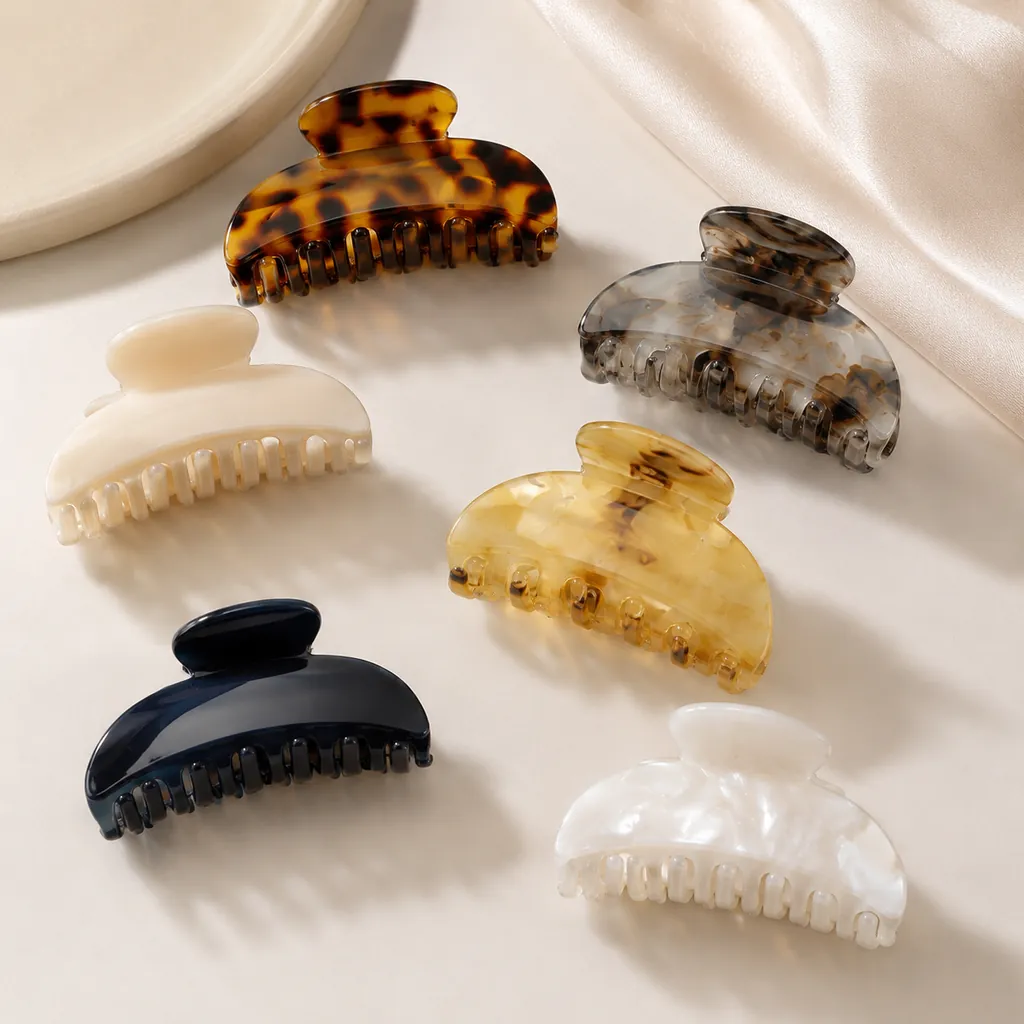
A flexible claw clip can be a useful comfort-led product direction, but “flexible,” “soft” and “silicone” are not interchangeable specifications. Brands should first identify the actual body material, then define hardness or flexural behavior, shape recovery, spring force, tooth geometry, finished weight and retention. Rigid acetate or molded-plastic clips remain the better choice when a collection depends on crisp geometry, a polished premium finish or highly repeatable jaw alignment. Neither construction is automatically safer, gentler or better at holding every hair type.
Why Flexible Claw Clips Are Becoming a Product Brief
Recent Reddit threads show recurring interest in clips that feel lighter, compress when the wearer leans back and avoid fixed pressure points. A July discussion about alternatives to hard clips drew dozens of votes and repeatedly mentioned soft or silicone options. An earlier fine-hair thread with hundreds of votes also included flexible-clip recommendations, while a newer fine-hair discussion focused on pulling, clip weight and how to distribute hold. These conversations are useful demand signals, but they are not laboratory evidence.
The commercial market also uses proprietary phrases such as “flexible material” or “engineered polymer.” Those descriptions may be valid for a specific product, but a private-label buyer still needs the resin family, supplier data, measurable performance targets and an agreed test plan. Do not copy a competitor trade name or assume that every bendable clip is silicone.
Flexible Is a Behavior; Material Names Must Be Verified
| Construction direction | Potential advantage | Specification risk | What to verify |
|---|---|---|---|
| Disclosed silicone or elastomer body | Soft contact, high surface friction and visible compression | Too much deformation may reduce tooth alignment or usable capacity | Material declaration, durometer, tear behavior, recovery and spring interface |
| Engineered flexible thermoplastic body | Can balance controlled flex with shape return | “Engineered” may hide the actual resin and test basis | Resin family, flexural target, repeated-bend recovery, heat aging and color stability |
| Rigid molded thermoplastic body | Repeatable geometry, strong color range and scalable tooling | Brittle behavior or sharp fracture depends on resin, wall thickness and molding quality | Resin grade, wall section, impact/drop test, hinge alignment and edge finish |
| Cellulose acetate body | Polished surface, pattern depth and premium hand-finished appearance | Usually designed as a structured body rather than a foldable one | Sheet grade, thickness, polishing, tooth geometry, spring assembly and finished weight |
| Rigid body with soft grip inserts | Adds friction only where needed without changing the whole shell | Insert peeling, residue, discoloration or adhesive aging | Insert identity, bonding method, warm-storage aging, snag check and replacement policy |
A supplier should not label a generic soft plastic as silicone without documentation. For elastomeric materials, ASTM D2240 describes durometer hardness measurement; for suitable plastic specimens, ASTM D790 describes flexural-property methods used for comparison and specification. These methods help define a material, but neither result alone proves scalp comfort, hair safety or finished-clip durability.
Hold Comes From the Complete Clip, Not Softness Alone
A flexible shell can still slip if the jaw opening, teeth and spring are wrong for the hair bundle. A rigid clip can feel comfortable when it is light, correctly sized and smoothly finished. Evaluate the body and mechanism as one system.
- Spring torque: enough to retain the intended bundle without relying on excessive pressure.
- Tooth geometry: length, spacing, overlap and inward curve matched to fine, medium or thick hair.
- Usable capacity: the bundle size the clip can hold while the spring remains in its working range.
- Body recovery: the flexible shell should return close to its defined shape after compression and storage.
- Weight and balance: a large lightweight clip may stay more stable than a small decorative clip with a heavy hinge.
- Scalp-facing finish: rounded tooth tips, smooth parting lines and hardware that does not create a localized pressure point.
For low-volume hair, start with the fit principles in the fine-hair claw clip guide. For high-volume bundles, compare jaw capacity and spring travel in the thick and long hair guide. Material choice should follow the target hairstyle rather than replace sizing work.
A Practical Test Plan for Flexible and Rigid Samples
- Confirm material identity: collect the supplier technical data sheet, material declaration, colorant information and destination-market chemical requirements.
- Measure the unused sample: total weight, body depth, jaw opening, tooth overlap, closed gap and spring opening force.
- Define material behavior: agree on the relevant hardness or flexural method with the material supplier or laboratory, including conditioning and acceptance range.
- Cycle the complete assembly: open and close the spring, compress the body as intended, then record cracks, whitening, permanent set, loose pins and changed alignment.
- Run retention panels: test defined fine, medium, thick and textured hair bundles for a stated time and motion routine; record slip distance and required readjustments.
- Age the finished clip: expose agreed samples to warm storage, humidity, cosmetics and normal cleaning, then repeat appearance, odor, grip, bonding and retention checks.
- Inspect removal: open the clip fully and check for snagging, coating transfer, caught strands, rough parting lines and sharp damaged edges.
Test methods must match the material and intended market. A durometer value, bend count or wear panel is meaningful only when the specimen, conditioning, equipment and pass/fail rule are recorded. Review the broader inspection process on the WINCOME quality-control page.
How to Write Claims Without Overpromising
| Claim direction | More defensible wording | Evidence needed |
|---|---|---|
| Material | Body made from supplier-declared [material name] | Material declaration and incoming-lot verification |
| Flexibility | Returns within the agreed dimensional tolerance after X compression cycles | Recorded cycle method and post-test measurements |
| Hold | Held the defined hair bundle for X hours in the stated panel | Hair profile, sample size, protocol and results |
| Comfort | X of Y panelists preferred the sample in a timed wear comparison | Panel design, comparison product and full result |
| Low profile | Maximum installed depth: X mm | Finished-product measurement |
| Environmental benefit | Specific verified attribute instead of “eco-friendly” | Competent evidence and clearly qualified wording |
Avoid “unbreakable,” “crash-safe,” “injury-proof,” “no hair damage” and universal “all-day comfort” claims unless the exact claim has an appropriate test and legal review. The EU General Product Safety Regulation requires manufacturers to conduct an internal risk analysis and maintain technical documentation for products placed on the EU market. In the United States, the FTC Green Guides warn against broad environmental claims that cannot be substantiated. A flexible feel is not permission to make a safety or sustainability promise.
For seated use, a flexible body may compress more than a rigid claw, but the responsible recommendation remains unchanged: if any accessory changes natural posture, presses against a vehicle head restraint or causes discomfort, remove it or change the hairstyle. See the headrest comfort guide for that separate fit question.
OEM Brief: What a Brand Should Send the Factory
- Target user and hairstyle: fine half-up, medium French twist, thick full updo or another defined bundle.
- Construction direction: disclosed elastomer, engineered flexible thermoplastic, rigid ABS, acetate or a hybrid grip insert.
- Target dimensions: length, width, installed depth, jaw opening, tooth profile and maximum finished weight.
- Performance targets: material range, recovery tolerance, opening/closing cycles, retention time and drop or compression condition.
- Finish and branding: color standard, texture, logo method, hinge finish and scalp-facing edge requirements.
- Market and compliance: destination countries, age positioning, labeling, traceability, chemical testing and packaging warnings.
- Sampling plan: at least two material or geometry directions tested before a bulk decision.
WINCOME can compare flexible, rigid and hybrid directions through the custom claw clip program. Send a target user, reference shape, desired material behavior, quantity and market through the sample consultation form; the final material, MOQ and test plan are confirmed with the project specification.
Frequently Asked Questions
Are all flexible claw clips made of silicone?+
No. A flexible clip may use silicone, another elastomer, an engineered thermoplastic or a proprietary blend. Ask for the material declaration and do not rely on “soft” or “silicone-like” wording.
Are flexible claw clips safer than rigid clips?+
Flexibility changes how a body deforms, but it does not prove injury prevention or crash safety. Shape, hardware, placement, spring design and the complete use condition still matter.
Do flexible claw clips hold thick hair?+
They can when usable capacity, tooth depth, spring travel and body recovery are designed for a thick bundle. Softness alone does not create hold.
Are rigid claw clips bad for fine hair?+
Not automatically. A small, lightweight rigid clip with correct capacity, smooth teeth and controlled spring force may work well for fine hair.
What should brands test before ordering flexible claw clips?+
Verify material identity, hardness or flexural behavior, body recovery, spring cycles, retention by hair profile, warm-storage aging, cosmetic exposure, bonding, edge finish and finished-product compliance.
Keep Reading
Related Articles
Start Your Project
Ready to Talk to a Factory Directly?
Free design mockup and factory-direct quote within 24 hours. Production MOQs vary by category; samples and in-stock items may be available below the custom minimum.