Metal Hair Clip Materials: Zinc Alloy vs Stainless Steel vs Aluminum
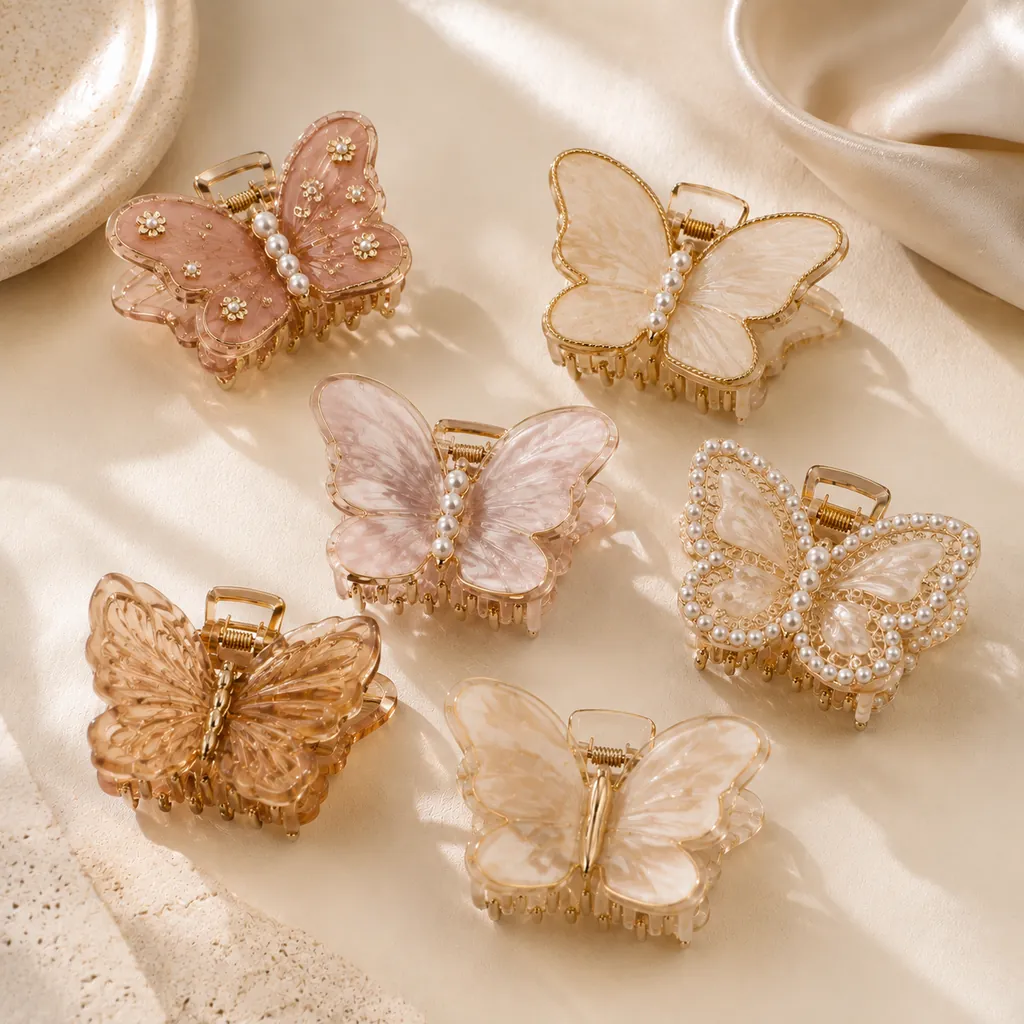
Zinc alloy, stainless steel, aluminum and brass support different hair-clip processes and design goals. Zinc die casting handles complex net shapes efficiently; stainless sheet supports stamped parts and corrosion-resistant springs; aluminum alloys reduce body weight; brass supports warm-color and vintage finishes. None is automatically strongest, safest or most durable in every design. Compare the specified grade, geometry, coating, spring and finished-product tests.
The Four Materials at a Glance
| Factor | Zinc Alloy | Stainless Steel (304) | Aluminum Alloy | Brass / Copper |
|---|---|---|---|---|
| How it is made | Die-cast into molds; complex shapes possible | Stamped from sheet, then bent | Stamped or extruded | Stamped or machined |
| Relative cost | Often economical for complex cast shapes | Depends on grade, gauge, stamping and finishing | Depends on alloy, gauge and finish | Depends on alloy, machining and finish |
| Strength & durability | Grade and section design control bending or fracture behavior | Grade, gauge and forming control stiffness and fatigue | Low density; gauge and alloy control dent resistance | Alloy and temper control formability and strength |
| Density / finished weight | Higher density than aluminum; geometry controls clip weight | Grade and gauge control finished weight | Low density; equivalent-volume parts can be lighter | Alloy and geometry control finished weight |
| Corrosion & finish | Specify base alloy, pretreatment and coating test | Grade and surface condition matter | Specify alloy and anodized or coated finish | Expect oxidation or patina unless the finish controls it |
| Skin-contact claim | Test the complete finish for nickel release | Grade and surface matter; verify the finished article | Check every alloy, coating, pin and spring | Check alloy composition, coating and the finished article |
| Candidate use | Complex decorative bodies | Stamped bodies, pins and springs | Low-weight bodies | Warm-color or vintage-style bodies |
Zinc Alloy: Complex Cast Shapes and Finish Control
Common zinc die-casting alloys combine zinc with controlled amounts of aluminum, magnesium and sometimes copper. International Zinc Association guidance describes their ability to cast thin, complex net shapes with good repeatability and efficient cycle times. That makes zinc a practical candidate for decorative bodies, but it does not establish what share of retail clips use zinc or whether zinc is right for every stressed component.
The trade-offs are design-specific. A cast zinc body and a formed steel part do not share the same failure mode, so compare section geometry, bending or drop criteria and the complete hinge rather than relying on a generic strength ranking. Coating selection and pretreatment also influence corrosion, wear and appearance; specify the full finish and test the production-representative clip. Our metal claw clips use zinc-alloy bodies with electroplated finish options in gold, silver and rose gold.
Stainless Steel: Specify the Grade, Gauge and Surface
Stainless steel is a family of alloys, not one performance level. Grades such as 304 and 316 can offer useful corrosion resistance, while gauge, forming, hinge geometry and heat treatment influence stiffness and fatigue. Compare the finished design and corrosion test rather than assigning a universal lifespan or cost multiplier to “stainless steel.”
Stainless steel can still contain nickel. Published testing found low release from certain low-sulfur 304 and 316 samples but materially higher release from nickel-plated metal and high-sulfur 303; surface condition also matters. REACH Annex XVII limits nickel release from articles intended for direct and prolonged skin contact, so grade wording does not replace an appropriate finished-article test. WINCOME can specify stainless springs and document agreed cycle, coating-adhesion and nickel-release checks on the quality control page.
Aluminum: Low Density, but Test the Whole Assembly
Wrought aluminum alloys have nominal densities around 2.7 g/cm³, so an equivalent-volume body can weigh less than zinc, brass or steel. Anodizing can provide color and surface protection. Do not extend those facts into an automatic “hypoallergenic” claim: verify the alloy, coating, fasteners, pin and spring in the complete clip.
A lower-density body can reduce weight, but dent resistance and stiffness still depend on alloy, temper, gauge and geometry. Sample aluminum for slim or low-weight concepts, then test the complete hinge, surface and assembly against the same acceptance criteria used for other material candidates.
Brass and Copper: Vintage Charm at a Weight
Brass and copper can support machined, engraved, antiqued or warm-color concepts. Their appearance changes with alloy, finish, sealer, moisture and handling, so define whether patina is an intended feature or a defect before approving samples.
Copper-containing surfaces can oxidize and form colored corrosion products; moisture, chemistry, coating wear and contact materials affect whether staining appears. A green mark is therefore a diagnostic clue, not proof of one base metal. For vintage finishes, specify the alloy and sealer, then test corrosion, color change and transfer under the intended use conditions.
The Finish System Needs Its Own Specification
A base-metal name does not define coating adhesion, wear, color stability, corrosion performance or nickel release. Document these three parts of the finish instead:
- Coating system: identify each layer, nominal thickness range, pretreatment and topcoat instead of using “two layer” as a universal quality grade.
- Performance method: agree on adhesion, abrasion, corrosion and color-change tests that match the market and expected use; process names alone do not prove a fixed durability multiplier.
- Nickel release: REACH Annex XVII sets limits for qualifying prolonged-skin-contact articles. Ask which current test method and accredited laboratory support the finished-product claim.
When you request a quote, ask for the base alloy, coating stack, nominal thickness, pretreatment, acceptance criteria and available test reports in writing. If a supplier cannot define the finish, treat appearance and durability as unverified until representative samples are tested.
Springs and Hinges Need Separate Acceptance Criteria
The spring and hinge deserve their own acceptance criteria because a body-material comparison does not predict tension retention, pin movement or joint wear. WINCOME can document agreed cycle checks, coating adhesion, edge inspection and destination-specific nickel-release testing — see the quality control overview. For sampling, define a repeatable open-close cycle count, fixture or operator method, initial tension measure and pass/fail threshold before testing. Spring behavior also interacts with clip sizing, jaw opening, tooth geometry and the target hair bundle.
Which Material Should Your Brand Choose?
- Complex decorative body: sample zinc die casting when geometry, finish options and production efficiency matter.
- Stamped premium body or spring: compare specified stainless grades and gauges, then validate fatigue, corrosion and nickel release.
- Low-weight body: sample an aluminum alloy with the complete coating, pin and spring assembly.
- Vintage / statement finish: compare sealed brass with antique-finished zinc and test color transfer and coating wear.
- Sensitive-skin positioning: make only a precisely defined claim supported by the finished-article test; no base-metal name is “allergy-safe out of the box.”
Whatever material you choose, make it a documented engineering and positioning decision rather than accepting an unspecified “metal.” Pair the alloy with the right finish and packaging, and keep the specification and test evidence available for buyers.
Material-to-Sample Decision Record
| Decision | Define before quoting | Verify on the sample | Evidence to retain |
|---|---|---|---|
| Fit requirement | Hair profile, hairstyle, working length and target weight | Retention, comfort and removal on representative use cases | Dimensions, weight, method and result |
| Body & spring | Alloy or grade, gauge, geometry, pin and spring | Alignment, opening, tension and agreed cycle check | Material declaration, drawings and cycle record |
| Finish | Pretreatment, layer stack, color and nominal thickness | Adhesion, abrasion, corrosion and color-change criteria | Approved color standard and test report |
| Market claim | Exact skin-contact, nickel or durability wording | Applicable finished-article method and acceptance limit | Current report tied to the tested construction |
For a hair-clip program, compare the material and finish against the actual barrette or snap-clip geometry rather than transferring a result from another product. Start with the fine-hair fit and retention guide, continue with MOQ, sample and QC planning, then review the custom hair clip manufacturer collection and submit the chosen body, finish, branding and test requirements through the quote form.
Frequently Asked Questions
What is the best metal for hair clips?+
There is no universal winner. Zinc can suit complex cast bodies, stainless can suit stamped bodies and springs, aluminum can reduce weight, and brass can support vintage finishes. Compare the specified grade, geometry, coating and finished-product tests.
Are metal hair clips hypoallergenic?+
Do not infer that from a metal name. Nickel release varies with alloy grade, sulfur content, coating and surface condition. Define the claim, destination-market requirement and finished-article test before using “hypoallergenic” or “nickel-free.”
Why do metal hair clips leave green marks?+
Copper-containing surfaces can form green corrosion products, but staining also depends on moisture, chemistry, coating wear and contact materials. Inspect the exposed layer and test the actual finish before assigning a cause.
How do I know if a metal clip has good plating?+
Ask for the full coating stack, nominal thickness, pretreatment and acceptance tests. Evaluate adhesion, abrasion, corrosion, color change and nickel release with agreed methods; a process name, layer count or coin scratch is not a standardized durability result.
Not sure which metal and plating fit your target price point? Send us your retail price and market, and we will spec the right material, finish, and testing for your line — free mockup and quote within 24 hours. Request a factory quote.
Keep Reading
Related Articles
Start Your Project
Ready to Talk to a Factory Directly?
Free design mockup and factory-direct quote within 24 hours. Production MOQs vary by category; samples and in-stock items may be available below the custom minimum.