Headband Materials Compared: Velvet vs Cotton vs Silk — Which Is Right for Your Brand?
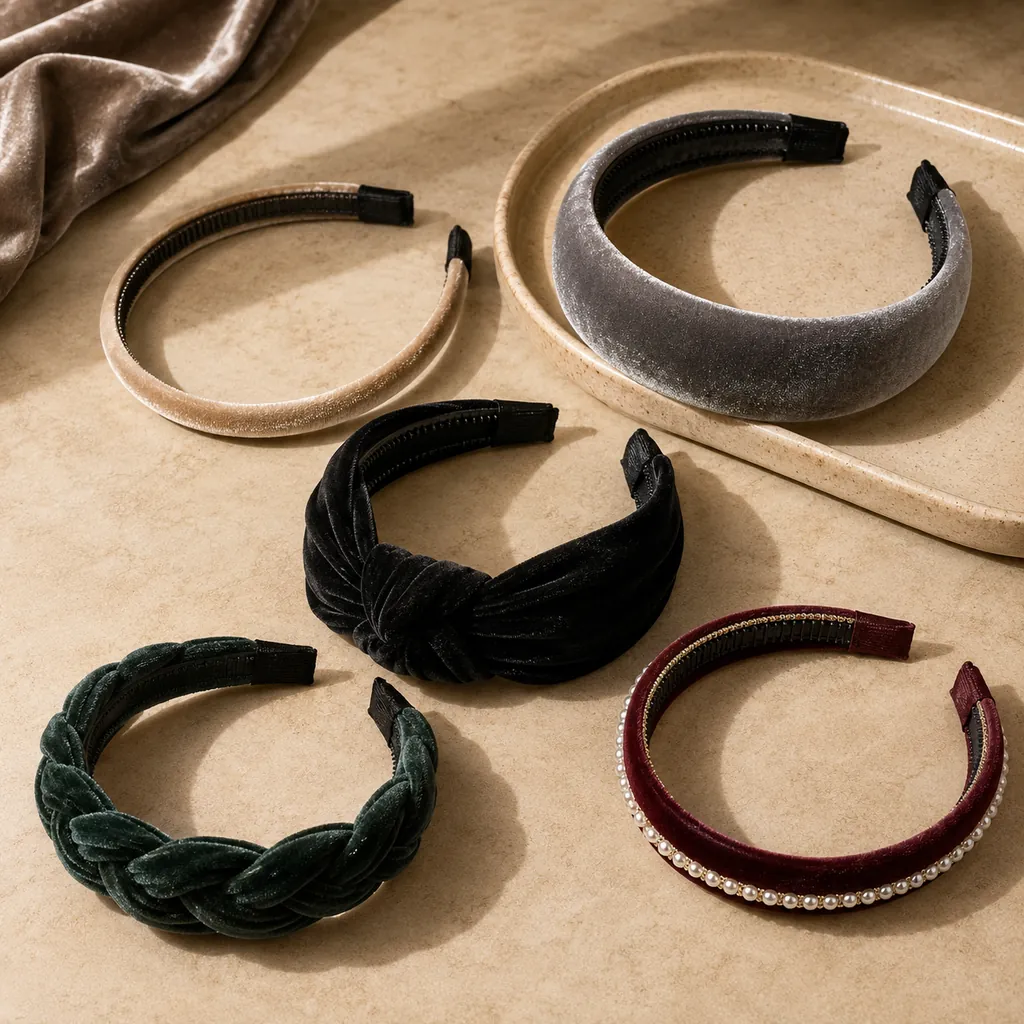
Headband material affects texture, care, appearance and positioning, but comfort and hair contact also depend on the base width, clamping force, seams, lining and wear time. Velvet is a pile construction that may be polyester, cotton, silk or a blend; cotton and silk are fiber names. Compare verified fiber content and complete samples instead of treating each label as one fixed performance level.
Velvet vs Cotton vs Silk: The Direct Comparison
| Factor | Velvet | Cotton | Silk |
|---|---|---|---|
| Feel & look | Plush pile, light-catching depth, rich colors | Soft, matte, casual and breathable | Smooth, glossy, delicate and luxurious |
| Hair-contact surface | Pile may add grip; check seam and drag | Depends on yarn, weave and finish | Can be smooth; check weave, seam and slippage |
| Heat and moisture feel | Depends on fiber, pile density and padding | Depends on fabric weight, weave and padding | Depends on fabric weight, weave and padding |
| Durability & care | Needs gentle care; pile can flatten | Very durable, machine washable | Delicate; hand wash only |
| Seasonal fit | Fall/winter hero | Year-round workhorse | Year-round, premium positioning |
| Factory cost | Mid (polyester/cotton blends) | Lowest | Highest (real silk fiber) |
| Typical retail | $10–20 | $3–8 | $15–25 |
Velvet: The Luxury and Fall/Winter Hero
Velvet's pile catches light from different angles and can create a plush visual effect. Because velvet can use polyester, cotton, silk or blends, require the actual fiber composition and pile construction rather than assuming “velvet” identifies the fiber.
The trade-offs are real. Velvet is the warmest option — thick pile traps heat, so it sells best in fall/winter collections — and the pile can flatten with heavy use or careless washing. For brands, velvet is the emotional purchase: burgundy, forest, chocolate and dusty rose in velvet sell themselves as seasonal statement pieces. This is why our padded, knotted and braided headband lines all offer velvet as the signature fabric.
Cotton: The Everyday Volume Seller
Cotton fabrics can support a matte, casual position and many washable constructions, but care and durability depend on dye, weave, trims, padding and adhesive. Validate the complete headband's wash method instead of assigning machine-washability from fiber content alone.
The styling trade-off is that cotton looks casual next to velvet or silk. It wrinkles more readily and lacks the light-catching drama of velvet. Position cotton as the value item in a price ladder: same silhouette, entry price, high volume. For brands building a kids' line or an everyday essentials range, cotton is the volume engine — see our knotted fabric headbands which are available in cotton as well as velvet and silk.
Silk: The Hair-Care Premium
Silk can support a smooth premium surface, but the finished friction depends on weave, finish, seams and headband pressure. Hair research establishes that friction and abrasion can contribute to fiber damage; it does not establish that every silk headband prevents breakage or moisture loss. Sample the complete construction and avoid medical-style benefit claims without product-specific evidence.
The cost is the catch: real silk fiber costs multiples of polyester velvet, and silk is delicate — hand wash, gentle care, shorter life in heavy rotation. Silk headbands belong in luxury lines, bridal collections and gift sets where the $15–25 retail price and the hair-care story carry the sale. For the full silk vs satin breakdown — including why most "silk" accessories are actually satin weave — see our silk vs satin scrunchies guide.
Which Material Should Your Brand Choose?
- Statement line: sample velvet when pile, color depth and padded or braided silhouettes support the concept.
- Everyday or kids' line: sample washable cotton constructions and validate the entire product's care and safety requirements.
- Luxury, bridal or gift line: sample verified silk fiber with a controlled weave, seam and care specification.
- Price ladder: compare the same silhouette in two verified fabrics, then let margin and sell-through data set the range.
- Seasonal rotation: use color and material changes without assuming one fiber is limited to a specific quarter.
Material is only half the product: the base construction (knot, padding, braid), the grip lining, and the packaging complete the story. If you are new to private label, our step-by-step brand guide covers the full process from spec to launch, and the China sourcing checklist covers factory vetting and QC.
Frequently Asked Questions
What is the best material for headbands?+
There is no universal winner. Select fiber and fabric for the intended look and care, then test the complete base tension, width, lining, seams, slippage and heat feel on representative users.
Are velvet headbands good for your hair?+
Velvet may add grip, but pile, seams and base pressure can also create drag. Test the complete construction and stop using any headband that causes pain, stinging or repeated pulling.
Do headbands damage hair?+
Any headband can cause discomfort or repeated tension if its base is too tight or its edges and seams drag. Dermatologists identify pain as a sign that a style is too tight and warn that repeated pulling can contribute to traction alopecia.
What is the difference between velvet and satin headbands?+
Velvet is a plush pile fabric — soft, textured, light-catching and warm. Satin is a smooth, glossy weave (often polyester or silk) with low friction. Velvet reads luxurious and seasonal; satin reads smooth and hair-friendly. Silk satin combines the satin weave with real silk fiber for maximum hair benefit.
Choosing between velvet, cotton and silk — or planning a seasonal rotation across all three? Send us your target retail price and market, and we will recommend the right fabrics, silhouettes and packaging for your line. Request a factory quote.
Keep Reading
Related Articles
Start Your Project
Ready to Talk to a Factory Directly?
Free design mockup and factory-direct quote within 24 hours. Production MOQs vary by category; samples and in-stock items may be available below the custom minimum.