Why Your Scrunchie Is Too Loose or Too Tight: Fit, Size & Elastic Explained
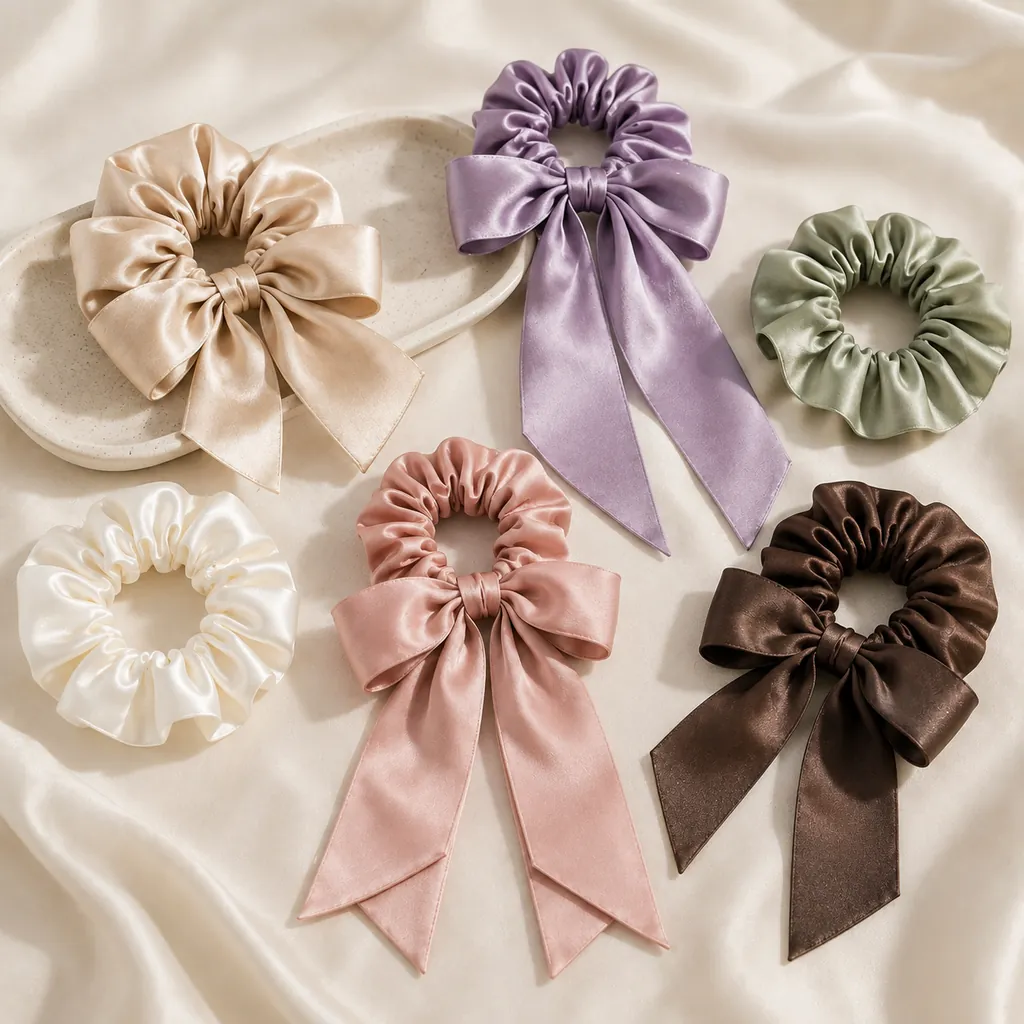
If your scrunchie slips with two wraps but pulls with three, try a different combination of elastic loop size and resistance. Do not force the extra wrap. A scrunchie's visible fabric size does not tell you how its inner elastic will behave around your ponytail or bun. Start with the hairstyle you want to secure, then compare finished samples for hold, comfort and removal.
Start with the problem you can actually observe
In an August 2026 discussion, a wearer described exactly this two-wrap/three-wrap problem. Another discussion included differing experiences with slippage, tightness and hair ties becoming larger with use. These accounts help identify questions worth answering; they do not establish a best material or size for everyone. Two-versus-three-wrap discussion · Hair-elastic discussion
Use the following as a starting point for comparison, rather than a diagnosis of every slipping hair tie:
| What happens | What to compare next |
|---|---|
| Two wraps feel loose; three feel uncomfortable | A different elastic loop size or lower resistance at the extension needed for your hairstyle |
| The scrunchie slides despite already feeling tight | A different finished construction or hairstyle; do not keep adding tension |
| A new scrunchie fits, but a used one no longer does | The same design unused versus used, checking relaxed dimensions, seams and visible damage |
| It holds a ponytail but struggles around a bun | Samples evaluated on that bun, rather than choosing by the ponytail result |
If styling causes pain or scalp stinging, loosen or remove the style. The American Academy of Dermatology identifies these as reasons to change a pulling hairstyle; persistent symptoms or hair loss warrant professional assessment. A soft fabric label does not override that advice. AAD guidance
Separate the fabric size from the elastic size
A conventional scrunchie uses an elastic element inside a fabric sleeve. The background description in a published scrunchie patent illustrates this arrangement and its use in repeated wraps. We use it here to explain construction, not as evidence of comfort or product superiority. Scrunchie construction reference
For shopping or sampling, distinguish four things:
- Outer fabric diameter: the overall size of the scrunchie when resting on a surface. State how the fabric is arranged when measuring it.
- Relaxed central opening: the opening visible without pulling. Gathered fabric can obscure it, so a photograph helps explain the measurement.
- Inner elastic loop: the elastic's own size and construction. A supplier specification or a separate component sample is more informative than guessing through the fabric.
- Fabric fullness: the volume of fabric around the elastic. An oversized look does not, by itself, specify a larger elastic loop.
Do not choose only by descriptions such as "mini," "skinny" or "jumbo." Ask what the seller measured and compare that information with a scrunchie you already find usable. For a private-label range, put a measurement sketch beside the size specification so the factory and buyer measure the same feature.
Stretch, resistance and recovery answer different questions
Extension describes how much a component lengthens. Tension describes the force associated with that extension. Recovery concerns what happens after the load is removed, including any remaining dimensional change.
ASTM D4964 addresses tension and elongation in elastic fabrics. ASTM D6614/D6614M addresses textile stretch and growth under specified conditions. Their public scopes support keeping these properties distinct; neither provides a universal comfortable scrunchie size or wrap count. ASTM D4964 · ASTM D6614/D6614M
For a wearer, the practical question is whether a finished sample holds the intended hairstyle without uncomfortable pulling. For a buyer, "very stretchy" leaves important questions unanswered: how hard is it to extend to the working size, and what shape does it return to afterward?
Treat two wraps and three wraps as different fitting conditions, not as quality grades. If neither works, compare another construction. There is no reason to approve an uncomfortable sample simply because an additional wrap prevents it from falling out.
Compare samples using the same hairstyle
The following is a proposed comparison routine, not a laboratory standard or a report of tests performed on WINCOME products.
- Choose one use case. Compare a low ponytail with a low ponytail, or a bun with the same type of bun. Note how much hair is included and whether it is dry or damp.
- Keep the comparison consistent. Use the same wearer, placement and styling products where practical. If you change these, record the change.
- Record the wraps. Note the number that gives usable hold. Stop if achieving hold requires painful pulling.
- Observe ordinary use. Choose the same observation period for each sample. Record slipping, rotation, adjustments and discomfort instead of relying on a vague "good hold" rating.
- Check removal. Unwrap carefully and note caught strands or a seam that needs further inspection.
- Compare the sample afterward. Photograph it beside an unused control of the same design. Repeat the same relaxed measurement after an agreed rest period.
For washing comparisons, follow the stated care instructions and record the wash, drying and rest conditions. Do not assume that shrinking a loose scrunchie will restore its original performance.
A simple sample record
| Record | What to write down |
|---|---|
| Sample identity | Design, size option, fabric and elastic specification if available |
| Intended use | Ponytail or bun, placement, and amount of hair included |
| Initial fit | Wrap count, initial hold and any pulling sensation |
| During use | Observation period, movement, slippage and adjustments |
| Removal | Snagging observations and the area involved |
| After use or care | Rest conditions, matching photographs and dimension changes |
These notes make your feedback more useful than asking for a "stronger" scrunchie. They can reveal whether you need another size, another elastic option or a different finished construction to compare. They do not establish medical safety or a universal pass/fail limit.
What brands should put in a scrunchie sampling brief
If you are developing a collection, describe the customer and hairstyle before specifying the appearance. An everyday ponytail accessory and a decorative bun accessory need separate evaluations, even if their fabrics match.
Ask for:
- A drawing identifying the measured dimensions, tolerances and measurement conditions.
- The elastic component specification and agreed loop size, with alternatives identified separately.
- Finished samples that keep fabric and sewing comparable while changing one elastic variable at a time, where feasible.
- A separate comparison of fabric options once a promising fit has been found.
- The care instructions and proposed checks after use and laundering.
- An approved reference sample and written acceptance criteria for the finished product.
When numerical stretch or recovery claims matter, ask a qualified laboratory to confirm the suitable method and specimen. A result for an elastic component should not be presented as a finished-scrunchie comfort test. Supplier and buyer should agree on the conditions and limits before approving bulk production.
For the separate question of fabric choice, see our silk versus satin scrunchie guide. Keep fit, material choice and styling appearance as separate decisions during sampling, then check them together in the finished accessory.
Frequently Asked Questions
Should I use two wraps or three?+
Use the number that provides suitable hold without uncomfortable pulling. If two slip and three hurt, compare a different sample rather than treating three wraps as the required result.
Are smaller scrunchies always better for fine hair?+
Choose for the amount of hair in the intended style. A smaller-looking fabric shell does not establish the inner elastic size or tension. Compare finished samples on your actual ponytail, bun or smaller hair section.
Will changing from satin to velvet solve slipping?+
Treat it as a comparison to try, not a guaranteed fix. Keep the elastic specification and use conditions comparable where possible, so you can judge what the fabric change contributes. Do not copy another wearer's preference as a universal rule.
Does a stretched-out scrunchie mean the elastic is poor quality?+
Appearance alone cannot identify the cause. Compare its condition with an unused sample, inspect the construction and review how it was used and cared for. For production decisions, use recorded results rather than a single photograph.
What should I send when requesting custom samples?+
Send the target hairstyle, reference sample or measurement sketch, preferred appearance, quantity and the fit problem you want to address. Ask which size and elastic options can be sampled before approving the final specification.
Explore our scrunchies and hair ties, or send WINCOME your sampling brief to discuss available options.
Keep Reading
Related Articles
Start Your Project
Ready to Talk to a Factory Directly?
Free design mockup and factory-direct quote within 24 hours. Production MOQs vary by category; samples and in-stock items may be available below the custom minimum.